
- +31 85 060 5206
- info@pixasolar.com
- +31 85 060 5206
- info@pixasolar.com
“What stood out in practice was Pixasolar’s flexibility.”
“What stood out in practice was Pixasolar’s flexibility.”
Hego Höfe: From Industrial Site to Mixed-Use Urban Destination
BIPV is shifting from niche innovation to architectural standard, and HEGO Höfe is a clear signal of that transition. This project illustrates how solar façades can move beyond technical add-ons to become integral to design, identity, and performance. By embedding photovoltaic technology directly into the building envelope, the development balances aesthetic control with measurable energy output. In close collaboration with Pixasolar, the result is not just a renovation, but a strategic blueprint for future-proof, design-led urban regeneration.
Hego Höfe started with an architectural ambition: Transform a former industrial site into a lively mixed-use destination. Something that supports culture, urban life and sustainability, rather than feeling like a leftover piece of infrastructure. Architect Hagen Plaehn approached the façade as the building’s identity: It had to define the project visually and perform technically.
BIPV as a Core Design Strategy, Not an Add-On
That is why BIPV became central to the concept. Instead of treating photovoltaics as an add-on, the façade itself became a power-generating surface, turning a previously passive elevation into an active envelope. The choice for glass-integrated PV supported a refined, contemporary material language: sleek, architectural, and coherent in changing daylight conditions, while generating renewable electricity directly on the building.
Scale and Performance: Designing for Energy and Aesthetics
In numbers, the façade is substantial: roughly 1,266 m² with 328 Pixasolar PV modules, designed for an estimated annual yield of around 70,000 kWh. But Hagen’s main point isn’t the kWh by itself, it’s how the facades read as architecture. The goal was a façade that feels deliberate and unified, not like a patchwork of technical components. To achieve that, the module layout was designed with strong attention to rhythm and proportion, aligned to existing structural lines so the PV grid looks native to the building rather than imposed on it.
Materiality and Detail: Achieving Visual Cohesion
Material and detailing decisions played a big role too: selecting glass-based PV panels that harmonize with adjacent façade elements, controlling reflections, and fine-tuning edges and alignments, so the surface feels calm and high-quality. Just as important was the transition between active PV zones and other components, signage, cladding, and non-active areas, so the overall façade remains visually continuous instead of fragmented.
Early-Stage Input That Shapes Design Freedom
Hagen describes the collaboration with Pixasolar as constructive and truly iterative. The value started early-on in the process. Technical feedback on panel options, formats, finishes and performance expectations helped shape the façade concept while there was still design freedom.
From Concept to Execution: Managing Complexity in BIPV
As the project moved forward, regular coordination sessions supported the detailed work, optimizing module arrangement, integrating mounting and electrical requirements, and ensuring architectural intent survived the inevitable technical constraints.
Flexibility as a Differentiator in Architectural Integration
Hagen: “What stood out in practice was Pixasolar’s flexibility: the ability to adapt module sizes and glass finishes meant the PV could be integrated without compromising architectural quality. That made it possible to keep the façade architect-led, while still delivering something robust, manufacturable and predictable on site. From specification to fabrication and delivery, the process was tightly managed, important in any façade project, and especially in BIPV where tolerances and visual consistency matter.”
BIPV as Architecture: Where Performance and Expression Converge
“HEGO Höfe shows that BIPV can be both ecological and expressive, reducing energy demand and communicating with a forward-looking attitude at the same time. And when the right partners are involved early, the result doesn’t look like technology applied to architecture. It looks like architecture that happens to generate energy.”
Related projects
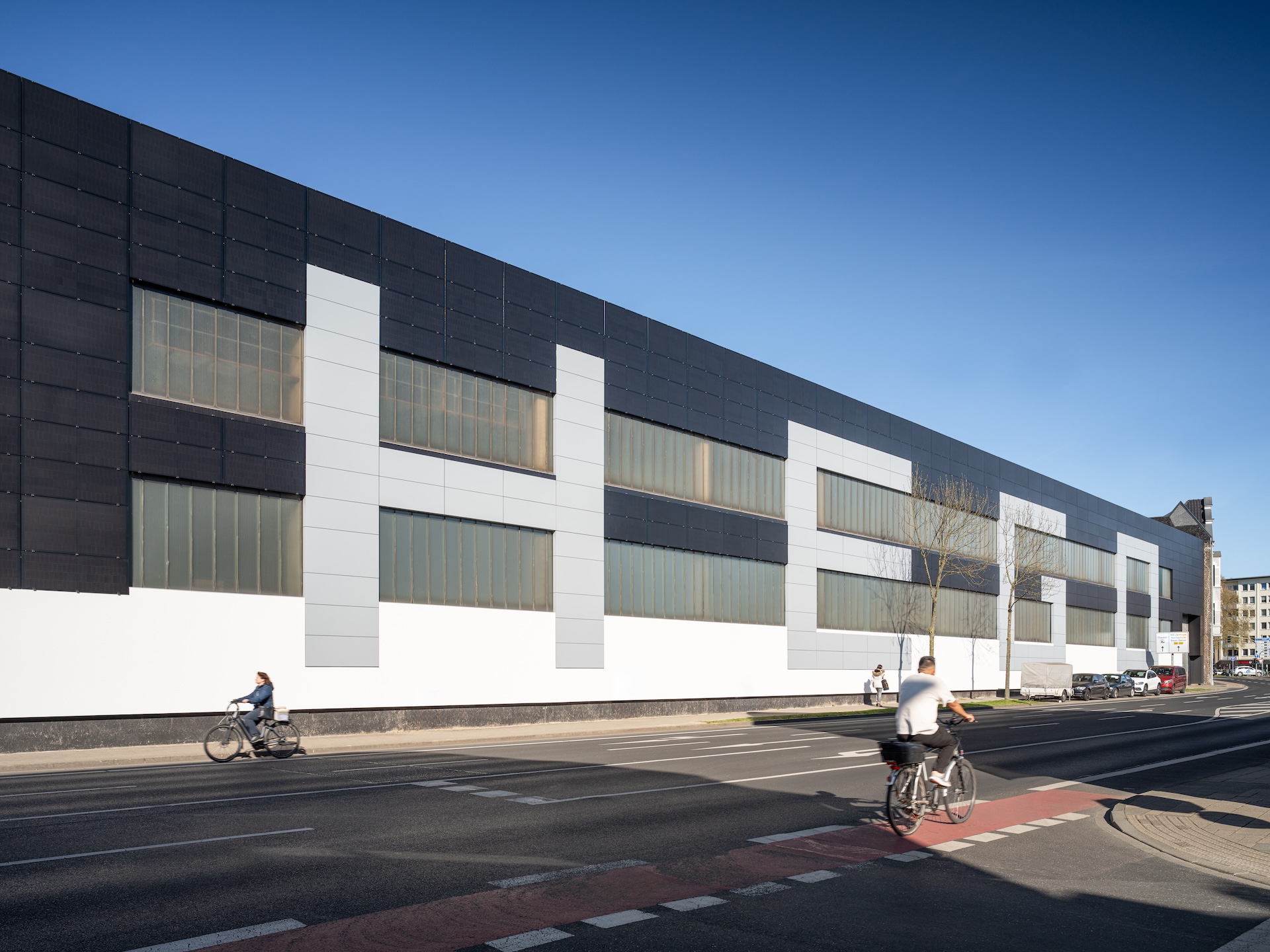
Hego Höfe
Hego Höfe shows how a necessary renovation can become a powerful architectural and energy-driven transformation. Located in Mönchengladbach, the former industrial site, partly more than 100 years old, has been given a new identity through the replacement of its outdated 1970s street-facing façade with an integrated solar façade.