
- +31 85 060 5206
- info@pixasolar.com
- +31 85 060 5206
- info@pixasolar.com
Pixasolar called me when the first talks on site started: What’s possible, what’s realistic?”
Pixasolar called me when the first talks on site started: What’s possible, what’s realistic?”
Hego Höfe: From 1970s Façade to Contemporary Energy-Generating Envelope
The transformation of existing buildings into energy-generating assets is rapidly becoming a defining challenge in contemporary architecture. The Hego Höfe project demonstrates how outdated façades can be reimagined into high-performance, visually refined building envelopes, without the need for full reconstruction. By combining advanced scanning technology, precise engineering, and integrated solar design, this renovation highlights a pragmatic yet forward-thinking approach to urban renewal. In collaboration with Pixasolar, the project moves beyond aesthetics, turning a complex retrofit into a scalable model for sustainable façade innovation.
The first meetings were already a while back, around 2021/2022. The assignment: take a tired, 1970s-looking street façade and turn it into something contemporary, without rebuilding the entire building from scratch. The existing structure was a challenge. The façade was made of exposed aggregate concrete panels from the 70s, and before any new system could be installed, the team had to make sure those panels were safely anchored and could take additional loads. “In a new building, you can plan everything from the beginning. The loads, the façade type, the fixing points. With an old building you first have to understand what’s there, test what it can hold, and then reinforce where needed.”
In this case, that meant reinforcement work to transfer loads properly into the primary structure.
Precision Through Technology: 3D LiDAR Scanning and Substructure Design
The next hurdle was precision. “The existing façade was extremely uneven,” Erik explains. To avoid surprises during installation, they did a full 3D LiDAR scan of the elevation. That scan became the basis for a substructure that could compensate millimetre by millimetre (longer here, shorter there) so the final façade reads as clean, flush and intentional.
A Hybrid Façade: Where Architecture Meets Energy Generation
Visually, the outcome is a hybrid façade: dark, glass BIPV panels combined with aluminum composite elements. It looks calm and architectural: exactly because the technical work behind it is hidden. Erik likes that many people don’t even immediately notice it’s producing energy: “From an aesthetic point of view it’s very appealing. Most people won’t see it has a practical part, until you tell them.”
Pixasolar: A True Project Partner, Not a Conventional Supplier
For Erik, Pixasolar wasn’t just a supplier. “Normally you call a supplier, tell them how much you need, they deliver and send an invoice. This was very different,” he says. “Pixasolar, especially Jochen, was there from the beginning. It was as having a partner at the table who understands not only the product, but also the realities of façade construction: tolerances, detailing, site constraints, and the thousand variables that make renovation projects tricky. That’s the nice thing about working with Pixasolar. You have a partner with a lot of expertise, and you can talk through the complicated parts.”
From Renovation to Pioneering Sustainable Impact
Looking back, he’s proud of the before-and-after transformation, and of being part of something that still feels a bit like pioneering: improving the street aesthetically, while adding real renewable generation to the building envelope.
Related projects
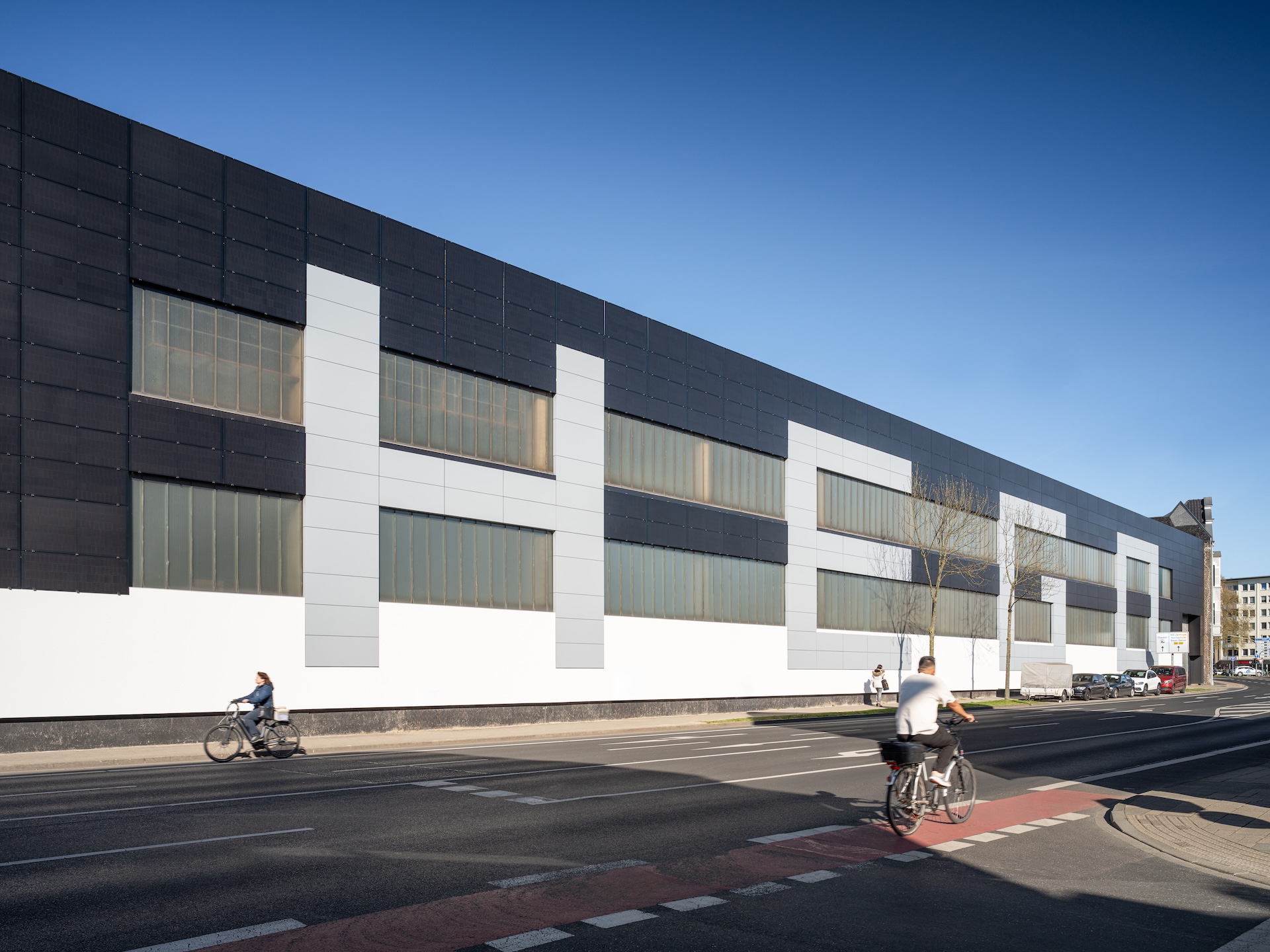
Hego Höfe
Hego Höfe shows how a necessary renovation can become a powerful architectural and energy-driven transformation. Located in Mönchengladbach, the former industrial site, partly more than 100 years old, has been given a new identity through the replacement of its outdated 1970s street-facing façade with an integrated solar façade.